
Fine Hair Length Retention: Stop Breakage and Keep the Length You Grow
Before getting into the topic of fine hair length retention, I have to let you know that this post is way past due.
Actually, I waited because I wanted to show you my actual results after growing my fine natural hair back from getting it cut—a lot—three times within a relatively short period of time.
Those cuts pushed me farther away from my hair goals. But now, I’m that much closer because I’ve learned which habits for length retention actually help me reduce fine hair breakage and keep more of the hair I grow.
This post was originally written in 2020, and I’m continually updating it to show my progress.

2026 Hair Length
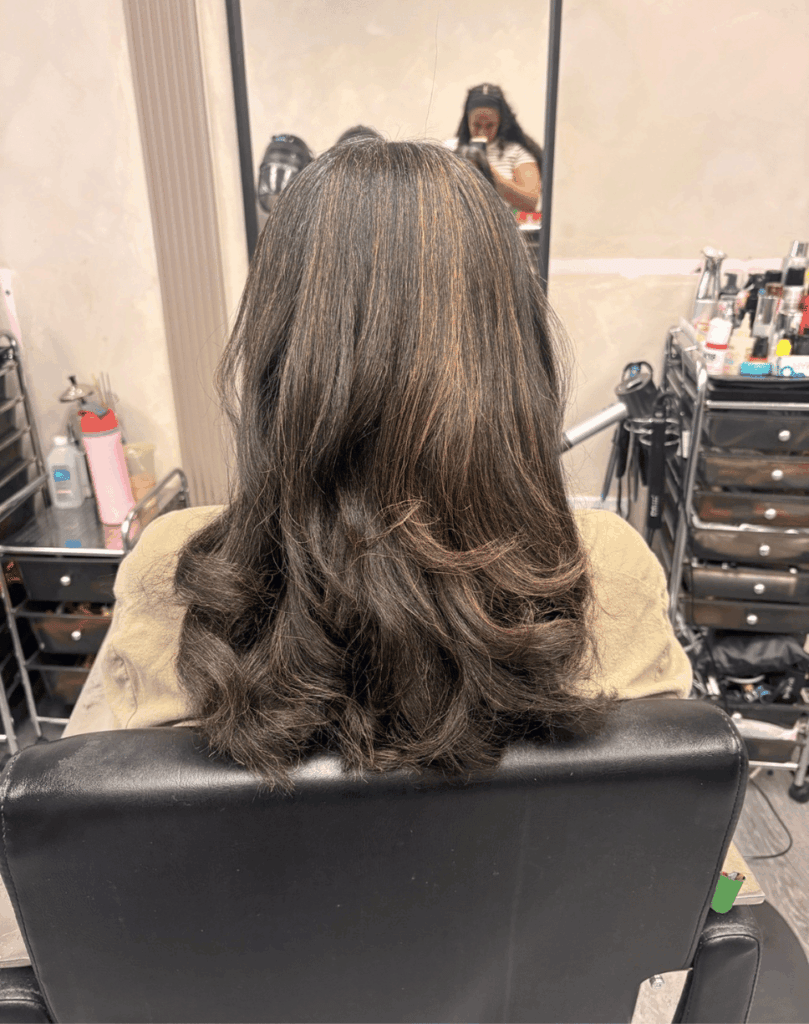
Before my most recent haircut, my hair was about two inches longer. My stylist removed only what was needed, so I was still able to retain much of my length.
More importantly, that trim put an immediate stop to the fine hair breakage I was experiencing from damaged ends tangling up on each other.
And that brings us to something important about fine natural hair length retention:
Growing hair and retaining length are not the same thing.
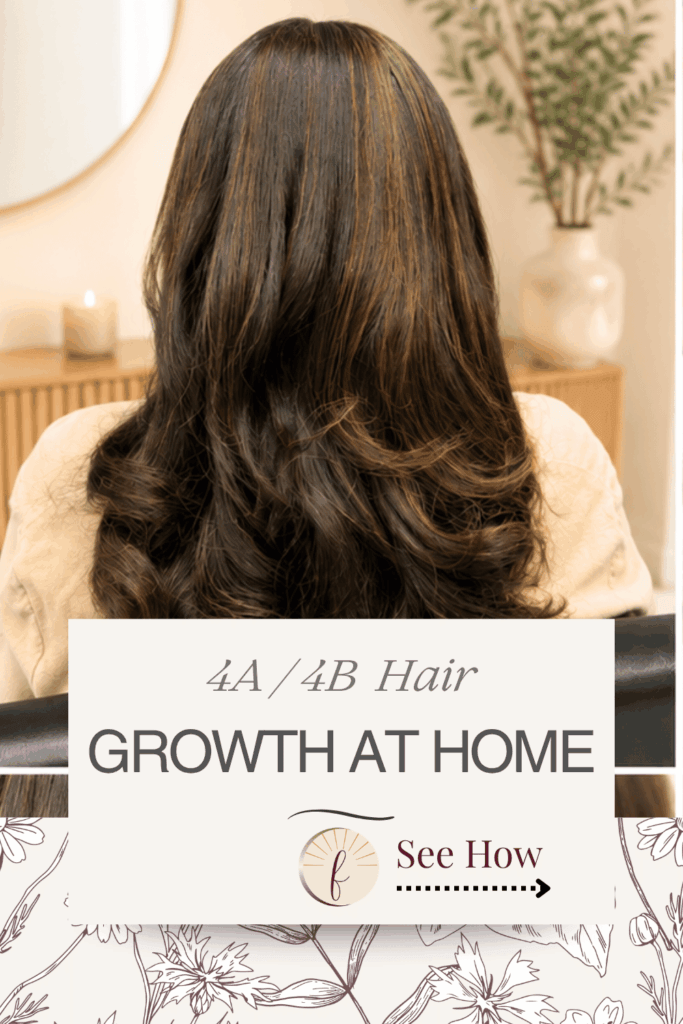
What Is Fine Hair Length Retention and Why Is Breakage Such a Problem?
Fine hair length retention is simply your ability to keep more of the hair you grow.
Your hair can be growing from the scalp, but if the ends are breaking at a similar rate, it may appear that your hair isn’t getting any longer. That’s why, for those of us with fine strands, reducing unnecessary breakage is such an important part of reaching longer lengths.
Having fine hair, I have to do certain things to help me retain length that someone with thicker strands may not require.
Depending on who you ask, the answer to the question “How do you retain length?” may vary.
Some say protective styling.
Some say maintaining a good protein and moisture balance.
Others say moisture, moisture, moisture.
All of these responses can play a role because length retention requires a concerted effort.
For my fine natural hair, the biggest difference has come from combining gentle handling, strategic strengthening, moisture, protecting my ends, and knowing when damaged hair needs to go.
However, I think some of what I’m about to share may blow your mind…a little bit.
Oh, and it may help you retain more length on your fine hair, too.
Let’s get to it!
The Habits That Help Stop Fine Hair Breakage

Fine hair needs a little extra care to reach longer lengths.
Fine hair breakage is one of the biggest reasons we don’t see progress as quickly as we would like. It doesn’t always happen so obviously, either. Sometimes, it’s a little snapping here, a few damaged ends there, and your ends are gradually breaking faster than you realize.
That’s exactly why your daily and weekly habits matter so much.
The practices I’m sharing below are the backbone of my regimen. Each one is simple on its own. Together, week after week, they’ve helped me greatly reduce breakage and keep more of the length I grow.
These aren’t things I do once in a while when I remember. They’re consistent practices I’ve built into the way I care for my fine natural hair.
1. Wash Hair in 6 Sections
For my hair at the length it’s at now, I’m finding that four sections are no longer enough.
The crown tends to be a bit more stubborn and requires much gentler handling. You may find that your crown is the same. I’ve read about many ladies having challenges with their crown area.
On wash day and while applying my pre-poo—another step I use to help protect my strands—I section my hair into six sections.
This gives me separate front, middle, and back sections that are much easier to manage.
I can attend to washing and conditioning each section more easily, and finger detangling—yet another practice I find helpful for my fine hair—is easier as well.
Interestingly, I also noticed that I was able to wash my hair much faster in six sections versus two or four.
Faster = easier = less manipulation.
For me, that’s the real principle here.
You don’t necessarily need to wash your hair in exactly six sections. The number of sections should depend on your hair’s length, density, and how easily it tangles.
The goal is to divide your hair into enough manageable sections that you can cleanse, condition, and detangle it without unnecessarily pulling, ripping, or repeatedly manipulating the same strands.
Reducing unnecessary manipulation is one of the simplest habits for length retention, especially when your individual strands are fine.
2. Use Protein Regularly to Help Strengthen Fine Hair
Protein, protein, protein!
You always read and hear about the importance of moisturizing natural hair. That’s important, no doubt.
A dry head of hair will snap, crackle, and pop.
Moisture is critical. I get it.
BUT…protein.
So many ladies have said they have “protein-sensitive” hair. I’m sorry, ladies, but I don’t agree that there is such a thing.
I believe the amount and type of protein—and how frequently it’s used—should vary by individual head of hair.
For us fine-haired curlies, I believe a regular regimen that includes protein is critical.
Hair is made predominantly of protein, particularly keratin. Proteins account for a significant portion of the hair fiber, so it makes sense to me that strengthening treatments would have an important place in caring for fine strands.
For my own fine natural hair, regular protein treatments have been one of the most important parts of reducing breakage.
I use protein in my hair regimen approximately every two to three weeks.
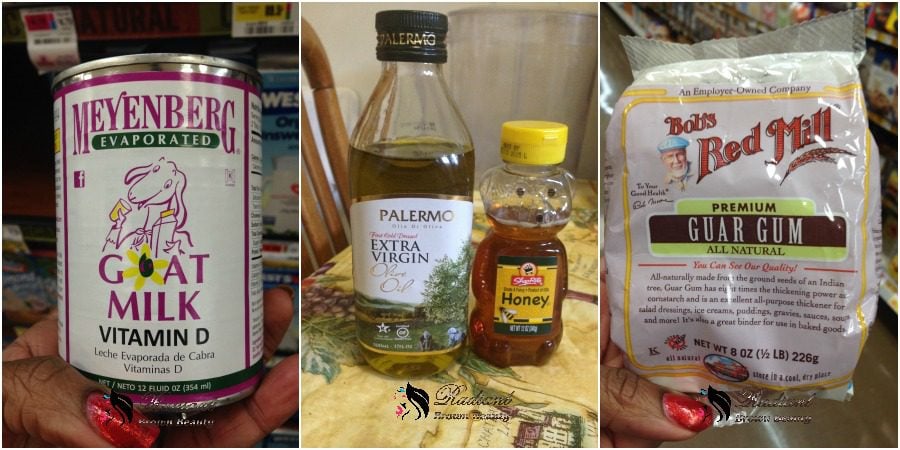
In the past, I used a tweaked version of a former blogger friend’s goat’s milk conditioner recipe. It’s an excellent strengthening recipe while also helping me keep moisture balanced.
However, these days, I don’t have much time for DIYs. Now, I use products formulated by brands that work well for my fine hair. Check out my go-to products here.
I’ve since found my happy protein spot!
I experience very little breakage between wash days and on wash day. I attribute a good deal of that to my hair being stronger thanks to the regular use of protein in my regimen.
The key is paying attention to your own hair. My frequency may not be your frequency.
The type of protein my hair responds well to may not be the type your hair responds well to. But for my fine hair, removing protein from my regimen altogether is not something I would do.
3. Keep Moisture and Strength in Balance
Back to the topic of moisture, though.
After a protein treatment, I typically follow it with a moisturizing deep conditioner to help maintain a good balance between strength and moisture.
The only exception I’ve found is when I use certain products that contain protein but also impart enough moisture that my hair doesn’t need an additional moisturizing treatment afterward.
This is why I don’t look at protein and moisture as enemies competing for custody of my hair. 🙂
My fine hair needs both.
Strength without enough moisture can leave the hair feeling too stiff. Moisture without enough strength doesn’t give my fine strands what they need to hold up well against regular handling.
For me, fine hair length retention has required learning how to recognize what my hair needs and adjusting accordingly.
4. Seal and Protect Your Ends Regularly
Since fine hair is lighter in weight and the individual strands have a smaller diameter, those delicate ends require special attention.
Sealing my ends has made a huge impact on how much length I retain.
When I wear twists or braids, I like sealing my ends with a thicker product such as Jamaican Black Castor Oil or shea butter. This helps keep my ends coated and protected.
However, when wearing my fine natural hair out, especially when it’s stretched, I’ve discovered that applying a light sealing oil works better for me.
Olaplex No. 7 is my go-to. It helps keep my ends smooth without weighing down the rest of my hair.
Tedious though it may seem, regularly protecting your ends can help reduce the conditions that lead to splitting, tangling, and single-strand knots.
For me, this is one of my best defenses against fine hair breakage.
Fine hair can become weighed down by heavy oils, so I avoid using a heavy sealant over the entire hair shaft. Instead, I focus primarily on the ends.
And, as you’ve undoubtedly heard, the ends are the oldest part of the hair. As a matter of fact, I seal slightly above the very ends.
That hair is old too. 🙂
Trim Damaged Ends Without Cutting More Hair Than Necessary
We all know about the importance of trimming hair.
While trimming doesn’t make your hair grow faster from the scalp, removing damaged ends can help prevent those ends from continuing to split, tangle, and break.
It’s a good idea to get a professional trim on a schedule that makes sense for your hair and how you style it. For me, that may mean at least a couple of professional trims a year, with adjustments depending on the condition of my hair.
If you regularly heat style, for example, your needs may be different.
In the interim, I maintain my length by trimming individual strands when I find obvious damage.
In the case of a lady with fine hair, seeing the damage can sometimes be a challenge. That’s why I also go by how my hair feels.
If the ends of a strand feel noticeably rough or damaged between my fingers, I examine that strand more closely.
Since the idea is to retain length, I don’t want to chop off perfectly healthy hair unnecessarily.
That’s where trimming individual damaged strands can be helpful for me.
How I Check My Fine Hair for Splits on Wash Day
On wash day, I feel my ends for little balls (not knots).
I figured out that some of these little balls were actually splits forming after I snipped one off and held it under a microscope. LOL. That’s the life of a true fine-hair gal!
Sure enough, it wasn’t a single-strand knot. It was a split.
Clipping only the individual hairs in this condition helps me preserve more of my healthy length instead of cutting away perfectly healthy hair.
Over time, trimming individual strands can cause the hair to become a bit uneven. That’s one reason it’s still important to get a professional trim periodically.
If you wear your natural hair in its curly state most of the time, slight unevenness may go unnoticed. This is why it’s necessary to have a professional assess the overall shape and ends of the hair.
The goal isn’t to avoid scissors at all costs. My goal is to remove what needs to go while keeping as much healthy length as possible.
How I Use Henna for Fine Natural Hair Length Retention
Henna Every Day? Almost.
You’ve probably read about the benefits of using Henna. If not, you’ll find an exhaustive number of blog posts and videos on the topic by simply searching the web or by checking out my comprehensive guide on using henna for beginners.
One thing you may already know is that a full henna session can be pretty intensive. We’re talking about potentially six hours in a day when you include preparation, application, rinsing, conditioning, and styling.
But what if you could incorporate henna into your regimen throughout the week in the form of a spritz or spray?
A henna spritz is something I used quite a bit after learning about it. I believe it helped set my hair up for the strength it has today.
Henna contains lawsone, its primary coloring component, which acts directly on the hair fiber. In my experience, incorporating henna into my regimen has made my fine strands feel stronger and more substantial over time.
However, because henna is a strengthening treatment, frequent use can make my hair feel a little hard. The way I counteract that is by following it with a leave-in conditioner. You don’t need to use much because too much product can ruin your hairstyle. And, it goes without saying, I find this method best when hair is in a curly style.
I may use a henna tea spray for about a month and then give my hair a rest from all the strengthening. After using the henna spray for a period of time, I gave it a rest and later switched to using a green tea spray.
How I Henna Today
These days, it’s rare for me to do a full-strength henna session.
However, to continue reaping the benefits of using henna, I do henna glosses every other month or so. I make my henna gloss by adding a tablespoon or two of henna to a deep conditioner without protein.
Along with low-manipulation or protective styling and following my regular wash regimen, my results are sort of impressive for fine hair.
Don’t you think?

Giving credit where credit is due, I learned what I know about creating henna tea from Curly Proverbz on YouTube. I would have never thought to use henna by way of a spray. It’s nothing short of amazing.
At this stage of my hair journey, henna glosses seem to be sufficient and work best for my fine natural hair and my lifestyle.
I’m totally in awe of the power of henna. It’s great that it’s all-natural, too. I don’t think I would’ve used it on my hair as regularly if it weren’t.
Benefits of Using Henna and Hair Teas

Whether I’m using a henna tea spray or a green tea spray, these herbal treatments have been helpful additions to my fine hair regimen.
After spraying my hair, I seal in the moisture with a lightweight oil.
For me, the benefits are twofold:
- Henna deposits onto and interacts with the hair strand. Its dye molecule, lawsone, has an affinity for the keratin in hair. Over time, I find that using henna makes my fine strands feel more substantial.
- Henna and green tea both give me another way to incorporate strengthening support into my regimen. Green tea contains catechins, including EGCG, while henna interacts directly with the hair fiber. In my experience, both have helped my fine hair feel stronger when used as part of a balanced regimen.
As long as I follow up with a leave-in conditioner or another moisture-balancing product when needed, my hair stays balanced.
For my fine natural hair, that’s the key: strength without sacrificing moisture.
The Most Important Habit for Fine Hair Length Retention: Consistency
There are definitely more than a couple of ways to prevent fine hair breakage.
Protein can help. Moisture matters. Protecting your ends matters. Trimming damaged hair matters. Low manipulation matters. Protective styling can help.
Henna and herbal treatments have also played a role in my own regimen.
Yet, there’s one thing you should never forget:
Whatever you do, consistency is key.
One protein treatment won’t transform your hair forever.
Sealing your ends once won’t protect them for the next six months.
Being gentle on one wash day doesn’t cancel out rough handling every other day of the month.
The daily and weekly habits are your foundation.
The extra treatments are the edge.
Together, that’s how I help my fine natural hair keep more of the length it grows.
For me, fine natural hair length retention hasn’t come from one miracle product, one protective style, or one secret technique. The one secret is the mixed bag.
It’s been the cumulative result of consistently paying attention to my hair, reducing unnecessary breakage, strengthening my strands, protecting my ends, and changing my regimen as my hair changes.
That’s the real secret to retaining length on fine hair:
Grow it. Protect it. Pay attention to it. And keep doing what works.




When will people of color stop taking credit for stuff they did not do.
Henna has been used by indian people for centuries. Curly Proverbs just picked up on it copied it and marketed it for a fast dollar . Now black people will have a fit if someone wears one of their braid hair styles and do not give the African/ African American race credit but to say this women CP came up with the idea of using henna on hair . Its a bold face lie. Give the Indian people credit they are the ones who have started and been doing henna .
Reading is fundamental. No where does it say CP discovered henna. What I said quite clearly is that she is the one who taught me about using henna as a tea.
I am very well aware of the origins of hennaZ this article was Sharing my experience with who I learned from.
If you aren’t keen on the subject matter of black hair, growth etc, it’s by the heck are you here? Just to get your opinion out? You could have saved it for yourself