Protective Styles that Actually Protect: Choosing Styles That Work
You either love protective styling or you hate it because you feel it’s a hindrance. Yet, when you choose the right protective styles, you’ll discover that they actually set your hair free. Let’s discuss.

You’ve been doing everything right: wash days, moisturizing, and protective styling. So why isn’t your hair growing?
Maybe you’ve been doing protective styles for months, years even, but you’re still stuck at the same length. Let’s assume that, in addition to protective styling, you have perfected your hair care routines, such as wash day, for your specific hair type.
So, why on earth are you not seeing your hair grow? There’s one reason and one reason only.
Your protective styles aren’t really protecting. They are doing more harm than good.
The protective styling tips for natural hair that follow will help you choose a style that truly protects your strands instead of simply tucking your hair away.
What Makes a Style “Protective”?
You’ll find many views on what makes a hairstyle truly protective. Some people will tell you that twists are protective, and in some way, they are.
However, a true protective style is one that completely hides away the ends of your hair and protects most of your hair overall from being exposed to the elements.
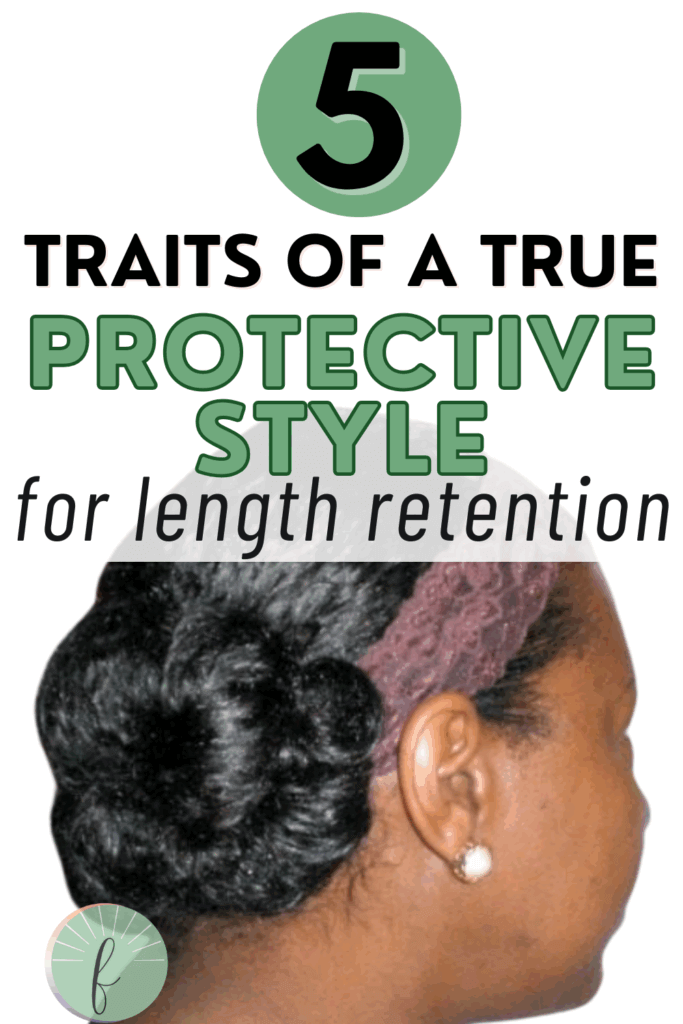
5 Characteristics of a True Protective Style
While the ends of the hair need to be tucked away for the hairstyle to be protective, there are five other traits of a true protective style. These are.
- The hair should be moisturized and sealed first, so that moisture is retained for a longer period of time. However, you still need access to your hair and scalp to add moisture if needed. Hence, this is the reason why hairstyles with added hair aren’t as beneficial as some may seem.
- You should be able to do this hairstyle relatively quickly. For example, getting your hair braided with extensions and then tucking the braids up is protective because the ends aren’t exposed. However, all the manipulation it takes to create the hairstyle (eight hours of braiding, for instance) kind of defeats the purpose of protecting the hair.
There is just too much manipulation, and the added braiding hair is actually absorbing moisture from your natural hair. So, take it with a grain of salt if you decide to do this hairstyle. - The rest of your hair needs to be protected as well, not just the ends. For example, you may have your hair up in a bun, but if you have a little ringlets hanging out on the sides or a bang, it’s not fully protective.
- There should not be a lot of tension added to your hair because while your ends may be hidden away, any tension can create traction alopecia, which is a form of hair loss.
- It doesn’t require constant restyling every day or so. For example, a bun is protective, but you will have to do it at least every three days, so it cuts down on its life cycle of being a protective style.
Choosing The Right Style for Your Natural Hair
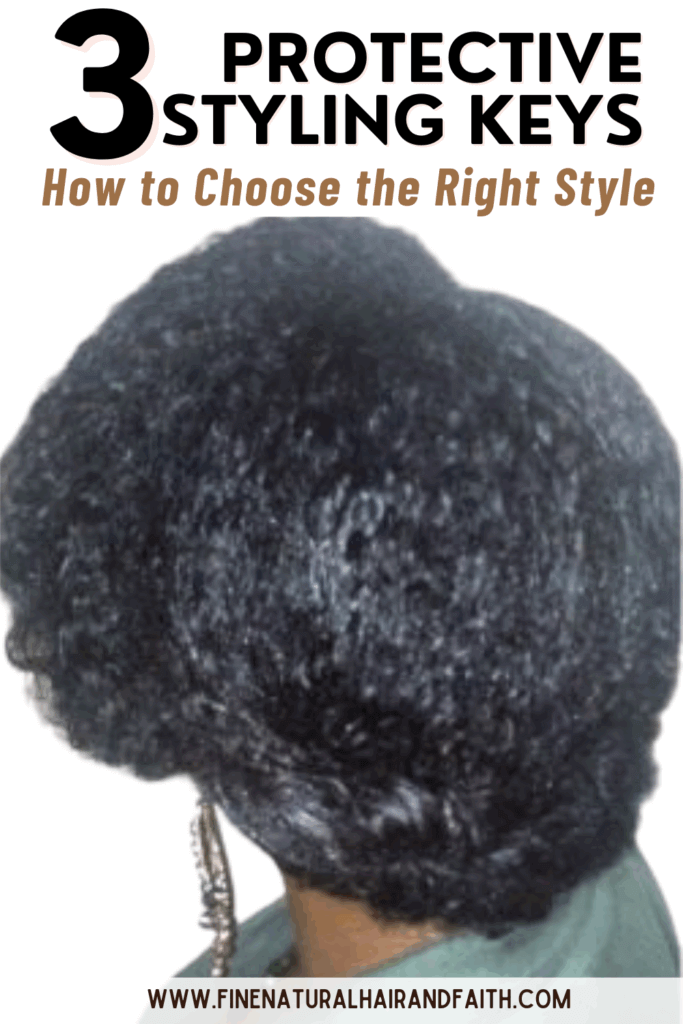
When it comes to choosing a protective style, there are 3 things to take into consideration: your hair type, skillset, and lifestyle
Choosing a Style Based on Your Hair Type
A certain style that may look good on someone with type 3 hair may not be as appealing to your hair type if you’re a type 4C, for example. That’s not to say that you can’t do the style. It’s a matter of preference regarding what looks good to you.
For me personally, while I love certain hairstyles on straighter hair textures, I do not care for how they look on my natural hair unless it’s straightened out.
Also, someone with a looser curl pattern may be able to manipulate their hair a little bit more to set a style.
Choosing a Style Based on Your Skill Set
Now, let’s examine your skill set. Are you good at braiding hair, or are you on the struggle bus? No shame. It’s just that braided styles won’t be your forte, and that’s OK. You may want to opt for flat twists, for example.
Choosing a Protective Style Based on Your Lifestyle
Now let’s discuss lifestyle. If you are busy and on the go, you may need a longer-term protective style. This could include twists that are pinned up completely, perhaps wrapped into a bun.
Maybe you’re short on time and need to throw your hair up quickly. In this case, head wraps may be a good option.
There are lots of protective styles that you can try to figure out what works best for your hair type, skill set, and lifestyle. Pinterest is the go-to source for discovering hairstyles.
I created a search to help you out. Click this link and you’ll be taken to a page on Pinterest that has tons of easy protective hairstyles without weave that you can try at home. There are tons of DIY protective styling options for you to choose from. Some are quick protective styles for black women, and others are protective hairstyles for growth that every hair type can do.
How to Prepare Your Natural Hair for a Protective Style
Once you’ve chosen a protective style that works for your hair type, skill set, and lifestyle, don’t rush straight into styling. How you prepare your hair can make the difference between a style that actually protects and one that contributes to breakage.
Gather Your Hair Tools and Products
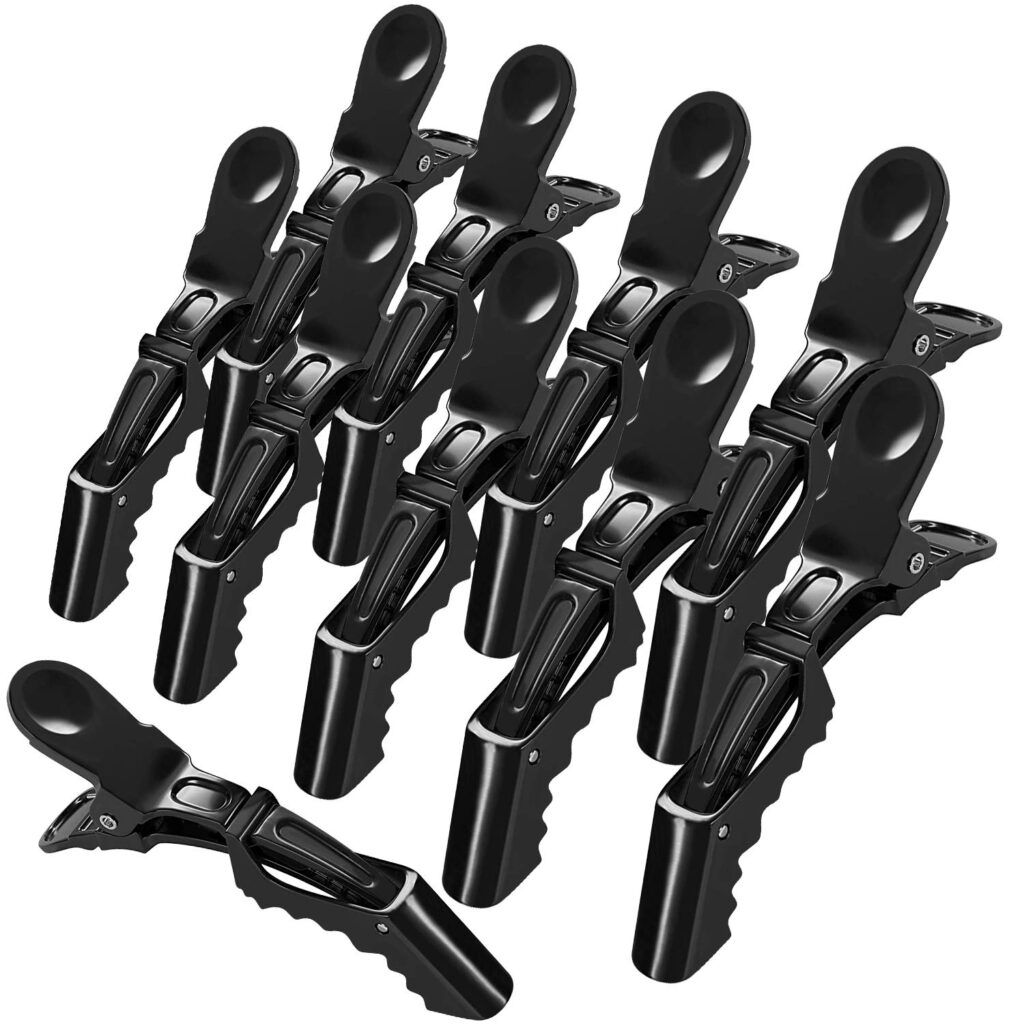
Before you begin, gather the tools you’ll need so you’re not searching for a bobby pin with half your hair already twisted. Depending on the protective style, you may want to have the following on hand:
- A large-tooth seamless comb or another curly hair-friendly detangling tool
- A rat-tail comb for parting
- Clips for keeping your hair in sections
- Bobby pins for securing the style
- A satin or silk scarf for protecting the finished style
You’ll also want your moisturizing and styling products nearby. This may include a cream moisturizer, a spray bottle with water, a lightweight oil or oil spray, gel if desired, and an edge product if you use one.
Section and Detangle Your Hair
Even if the hairstyle you’re creating doesn’t require you to work in sections, sectioning your hair makes it easier to detangle thoroughly and prepare every part of your hair before styling.
This is especially important because putting tangled hair into a protective style doesn’t make those tangles disappear. You want your hair properly detangled before you tuck it away.
Moisturize Before Protective Styling
Adding moisture to your natural hair is crucial before creating and setting a protective style.
You can moisturize by lightly spraying your hair with water and working it into your strands, followed by a lightweight product to help seal that moisture in. When a protective style requires more manipulation than usual, starting with moisturized strands helps reduce the risk of breakage while you’re styling.
Alternatively, you can use a cream-based moisturizer. Creams tend to be lighter than heavy butters and can work especially well on fine natural hair.
Seal and Set Your Protective Style
After your hair is moisturized, you’ll want to seal that moisture in and set your style.
For twists, braids, and similar styles, your process may look something like this:
- Add moisture to the section with a light spritz or cream moisturizer
- Apply an alcohol-free gel for additional hold if desired
- Finish with a lightweight oil to help seal in moisture
- Give extra attention to your ends by double sealing them
Oil can also be applied before gel. The gel is there to help set the style, while the oil helps seal in moisture, so you can adjust the order based on what works best for your hair. If I use gel, I recommend flaxseed gel.
For me, the gel is optional. The oil is not.
When you go to sleep, tie your hair down with a satin or silk scarf. This helps preserve the neatness of the hairstyle and can also help your hair retain moisture.
Mistakes That Ruin The Protective-ness of Your Style

Choosing protective styles without breakage as the goal means paying attention to more than just the hairstyle itself. How you prep, install, maintain, and remove the style matters too.
So, I’d be remiss in neglecting to share the mistakes that can turn an otherwise protective style into one that does more harm than good. These include:
- Leaving the hairstyle in for too long. This can cause your natural hair to mat and tangle. Then, when you go to take it down, you have to manipulate more than you should, increasing the risk of breakage.
For short-term protective styles such as buns and roll-and-tuck styles, 5–7 days is a good rule of thumb. Styles created with added hair may be worn longer, but remember that the longer a style stays in, the more shed hair is being trapped. Don’t put off taking your hair down indefinitely when it needs to be cleansed, conditioned, moisturized, and detangled. - Not prepping your hair first by fully detangling and moisturizing
- Pulling your hair too tightly to set the style. This does nothing but cause hair breakage, defeating the purpose.
- Ignoring your hair while it’s in the style. You still need to moisturize your hair and oil your scalp regularly.
Regularly for you may mean once a week. For others, it may mean every other day. You need to figure out what works best for your hair and scalp.
Cute and Easy Protective Style Ideas
By now, you may be interested in the protective styles I have in mind. When choosing protective styles for length retention, you want styles that are easy to do, maintain, and keep your ends tucked away.
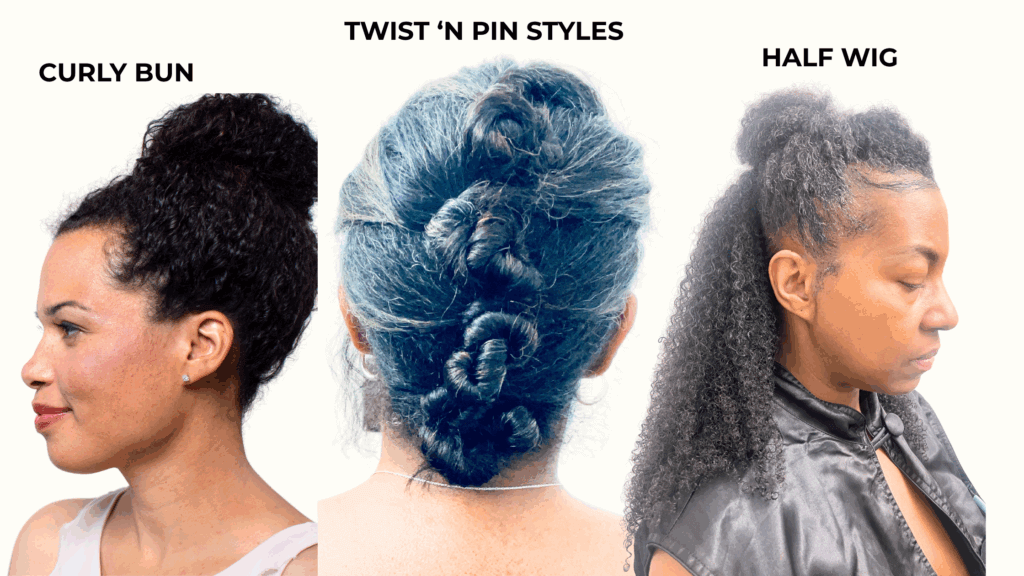
Aside from the half wig, these styles can easily be tied down at night and maintained for up to a week. All that you’ll need to do is neaten up your edges. Alternatively, you can go with a messy bun or messy boho look with the twist ‘n pin styles.
One thing to note is, the twist ‘n pin styles never look the same. You can change this style up with how you position the twists before pinning them. You can also change how it looks by the number of twist ‘n pins that you do. Here’s another twist ‘n pin style that I’ve done to create the appearance of a triple bun:

The Protective Style I Discovered Looks Best on My Fine Natural Hair
While protective styling is about protecting your ends so that you can retain more length, it’s also about how good it makes your hair look. At least for me, it is.
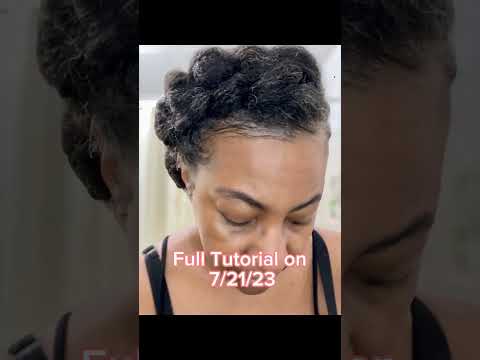
I’ve tried many protective hairstyles over the years that protect the ends, but in my opinion, none of them make my hair look as voluminous as this style that I demonstrated in a short I created on YouTube here:
Bonus Tips for Helping You Make Protective Styling Successful
While I think I offered you more than enough info on making protective styling successful, there are a few things to add that I won’t go into detail on, but you should still know the highlights:
- Learn your hair’s tolerance for tension and weight
- Use satin/silk accessories to jazz up and prevent the style from frizzing while you’re sleeping – this extends the life of the style
- Take breaks between styles. Nobody should be keeping their hair tucked away indefinitely
3 FAQs About Protective Styling
The term “protective styling” is most commonly used in natural hair circles, and it’s a very popular term. Hence, many questions have been raised.
Here are 3 of the most popular, along with my personal responses to them.
1. Do protective styles help hair grow?
Hair growth has nothing to do with how you style it – unless you are impacting the scalp with your styles.
Hair grows from the scalp. If hair growth is your goal, you should focus most on doing the things that support that. This includes proper nutrition, stimulating growth beneath the scalp, and keeping the scalp free of dirt and buildup.
2. What protective styles can you keep in the longest?
When I read this question, I immediately thought, “Whoever is asking this question is either lazy, really short on time, or simply doesn’t enjoy doing their hair.
So, the practical response is that the protective style you can keep in the longest is the one that will not frizz or loosen up the fastest. For most people, this will be braids, flat twists, or cornrows.
Yet, the more realistic response is that the style you can keep in for the longest to protect your hair is the one you will attend to and not just forget about. For some people, wearing a simple style that only requires light touching up may be something they keep up with and wear for a long period.
3. What to do in between protective styles?
When you take down your protective style, it’s a good idea not to go right into your next style.
Wash and deep condition your hair, and then give it a little rest between styles. That doesn’t mean you’ll need to wait weeks – more like a couple of days. Take the time between styles to tend to your ends and scalp more intently.