Christian Journaling Ideas: 10 Faith Journaling Methods
How a simple notebook can become a place for prayer, reflection, scripture study, and living out your Christian faith.

Writing down your thoughts and copying Bible verses are two ways you can incorporate faith journaling into your life to live a Christian lifestyle.
If you are a believer who wants to grow spiritually, faith journaling is a great (and fun) way to do so.
A faith journal can be used in many ways beyond writing out thoughts and scriptures. It’s a way to track your prayers, scripture reflections, sermon notes, gratitude lists, lessons God is revealing in your everyday life, and much more.
The Christian journaling ideas you’ll read below will show you practical ways to use a journal as part of your daily walk with God so that your faith becomes something you actively practice.
Key Takeaways
- Faith journaling helps believers grow spiritually through writing prayers, tracking gratitude, and reflecting on scripture.
- You can use a journal for various purposes, such as setting faith goals, tracking prayer requests, and capturing spiritual lessons.
- Incorporate practices like Bible verse journaling, word studies, and sermon notes to deepen your understanding of faith.
- Journaling confessions and affirmations rooted in scripture supports personal growth and strengthens faith.
- Regular gratitude journaling shifts focus to God’s blessings and fosters a thankful heart.
Prayer Journaling: Writing Your Conversations With God
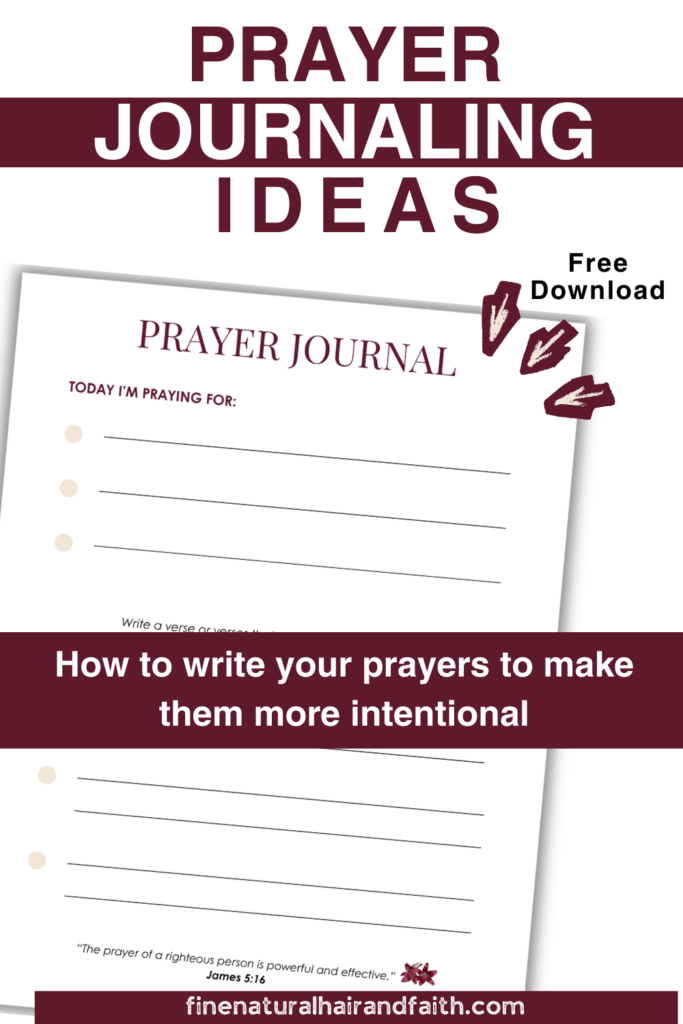
Journaling your personal prayers is the first of ten faith journal ideas that I recommend you try. Writing out your prayers allows you to slow down and express to God what is on your heart. Here’s where you can be honest with the Lord.
Journaling your prayers is especially useful when you feel like you are struggling to find words out loud.
Using a faith journal is also the perfect way to pray more intentionally for others. And, just like journaling your personal prayers, you’ll be able to look back and see how God is answering the prayer requests that others have entrusted you with.
Instead of rushing through prayer, journaling gives you space to write about all the different situations you are facing and the decisions you need to make. I find that prayer journaling helps me stay focused and thoughtful during my prayer time.
A Record of God’s Faithfulness
Over time, your written prayers become a record of God’s faithfulness in your life. You can look back on answered prayers, lessons learned through difficult seasons, and times when God has given you the wisdom you need for a given situation.
I recommend creating dedicated pages in your journal for family members, friends, church leaders, your nation, and situations that are happening in your community.
Faith Journaling Goals for Spiritual Growth

I don’t know a person alive who doesn’t have at least one goal. People set all sorts of personal goals, like for work, finances, health, learning, and much more, but rarely consider goals related to their spiritual life.
As Christians, we should have at least a goal to grow spiritually. You can use a journal to record all of your Christian faith goals and the spiritual priorities that help you to reach them.
Some examples of faith goals you can set to grow spiritually include:
- reading through a book of the Bible
- Becoming more persistent in your prayer life
- Learning and memorizing scriptures
Bible Verse Journaling: Reflecting on Scripture
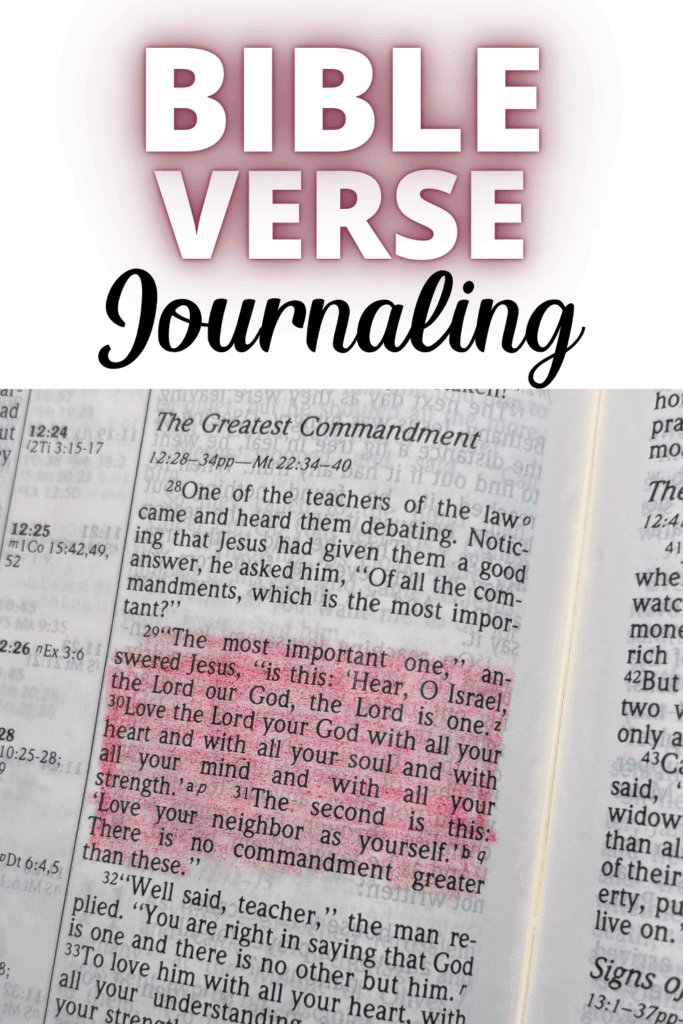
Bible verse journaling is a way to slow down and reflect on specific passages of scripture.
Instead of reading through the Word quickly (I’ve been guilty of this), you can write out a short verse or number of verses and spend time meditating on them. Look at ways the scriptures reveal God’s character, His promises, and guidance for your life.
Some people like to focus on short Bible verses that are easier to remember and meditate on throughout the day, while others enjoy reflecting on deep Bible verses that reveal more about God’s character and truth.
A Bible verse study in your journal might include writing the verse, recording related faith verses, reflecting on how the verse applies to your life, and selecting verses for scripture memorization.
Bible verse journaling helps turn your scripture reading into thoughtful reflections that allow God’s Word to transform the way you think.
Bible Word Studies: Exploring Key Words in Scripture
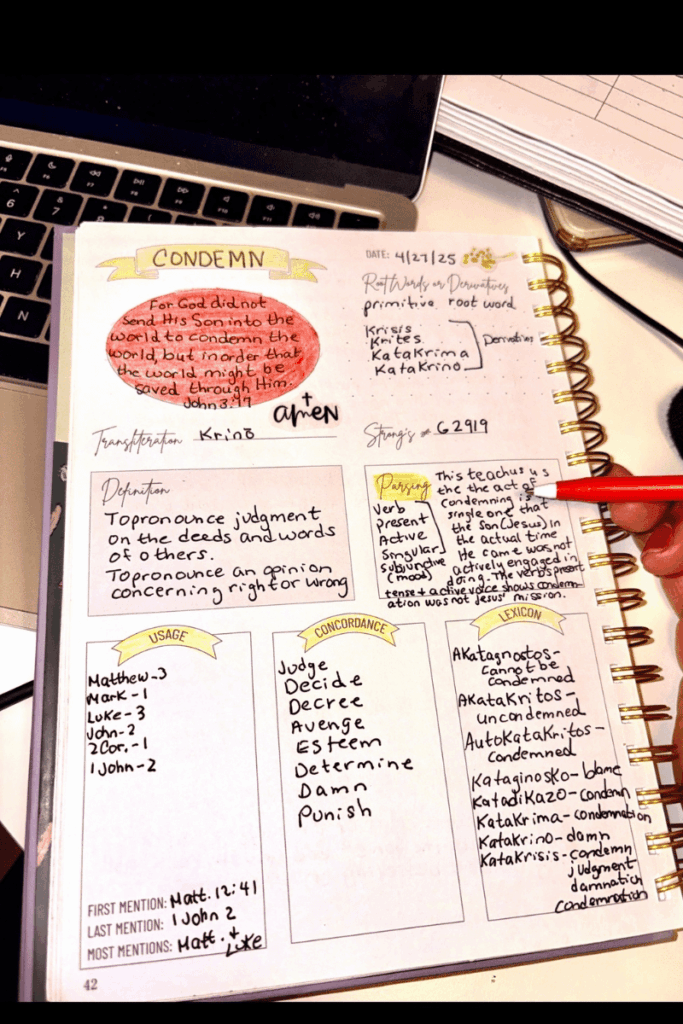
Another powerful way to use a journal as a regular part of your Christian lifestyle is by writing out and then studying biblical words you find throughout the Scriptures.
To do a word study, you’d focus on specific Bible words that have impact on your life. Some words I’ve studied include:
- Naked
- Believe
- Reconciled
- Condemn
- Bounty
- Love
- Faith
There are so many juice words in the Bible that you could study that give such an eye opening experience.
Studying individual words is a type of Bible verse study that will deepens your understanding of the scriptures and will help you recognize important themes that appear throughout the Bible.
Word studies are among the most engaging scripture journaling ideas. While you can use any plain notebook, I love using The James Method’s Word Study Journal to do this.
Christian Goal Setting: Aligning Your Life With Biblical Priorities
Similar to writing out your faith goals, you can also journal about how your faith influences your everyday decisions. This is less about journaling the actual goals you set and more about how those goals are changing your life.
While your faith goals would include things like reading scripture or praying more regularly, this type of journaling would include reflecting on how biblical values shape your choices and priorities.
- Where are you feeling the struggle of straddling between worldly priorities and what God is calling you to?
- How is your faith showing up in how you steward your time, your money, your physical body?
Because this is a faith based natural hair care site, I write through the lens of caring for natural hair from a position of stewardship.
Your journal could include observations about how you navigated a difficult decision through a biblical lens, or how you are learning to realign your daily priorities around what matters most. Using a faith journal in this way can help bring even more clarity and direction to your spiritual life.
Spiritual Growth Journaling: Recording What God’s Teaching You
A journal can also become a record of your spiritual growth journey. Unlike reflecting on your faith goals and how they shape your decisions, this type of journaling focuses on what God is doing in your life over time.
Rather than tracking goals or decisions, you would capture moments of conviction, and unexpected lessons. Think of it as a living testimony you are writing in real time.
Your entries might include a circumstance that stretched your trust in God. Looking back over these entries, you will begin to see just how faithful God has been and how He’s growing you up spiritually.
Bible Copying and Scribing
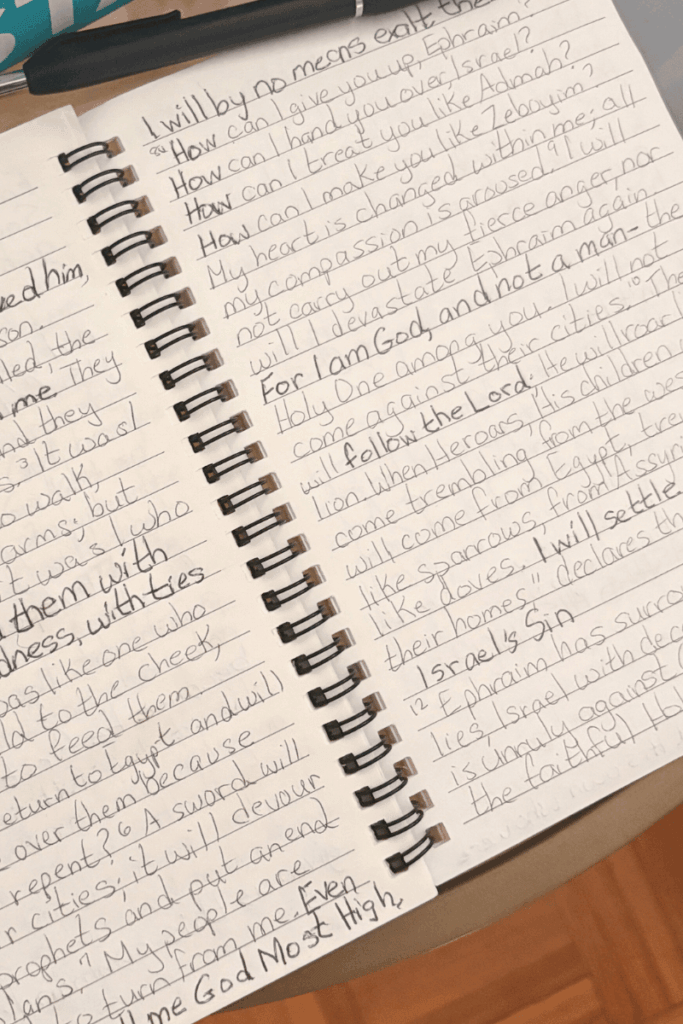
A simple notebook can also be used to copy Bible passages for deeper reflection. This is also known as scribing. I really enjoy taking a few minutes every morning to copy out scripture.
If you’re anything like me and need some ideas on what scriptures to copy, check out The Bible Copy Club. They send out themed emails every weekday with specific scriptures to copy by hand.
Journaling Confessions and Affirmations Rooted in Scripture
Another way to use a journal is to write out Bible based confessions and journaling affirmations rooted in biblical truth.
Instead of speaking worldly affirmations or even personal opinions, you can focus on speaking and writing the truth that’s revealed in God’s Word.
For example, you might write out statements that remind you of your identity as a daughter of God or affirm God’s promises that you find in faith scriptures.
This goes beyond personal motivation. Writing out the truths you find in God’s Word regularly can help keep you develop the mind of Christ.
Sermon Notes and Devotional Reflections
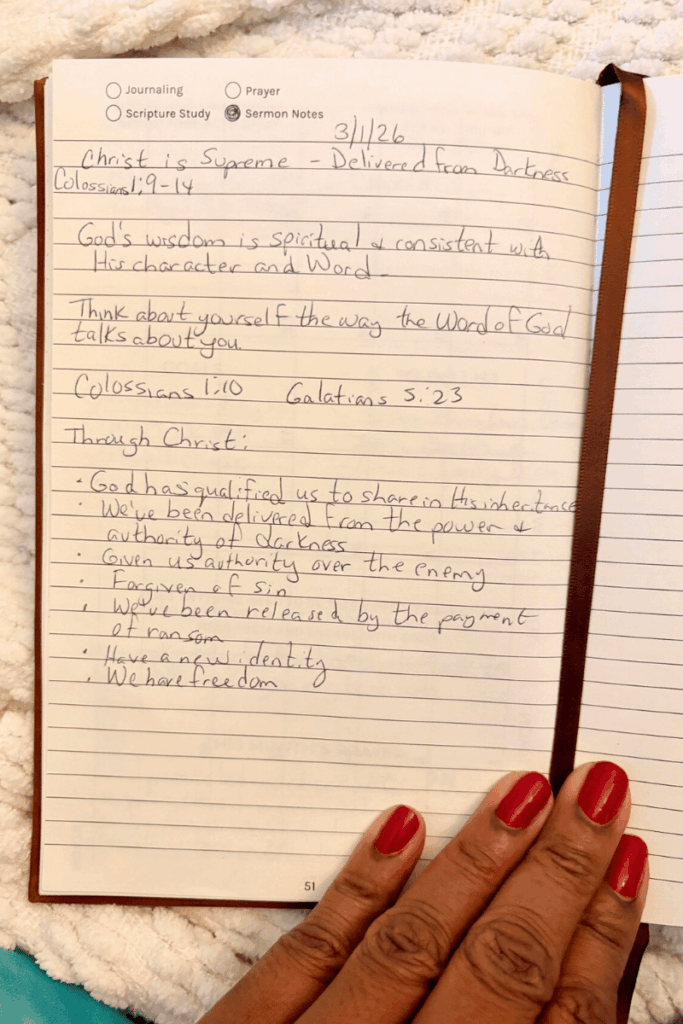
You can also use a faith journal to write out sermon notes or devotional reflections. Writing out church sermon notes or reflections from devotional readings and Bible studies in your journal will help you to absorb what you are learning.
A plain writing notebook is sufficient, but I use my Word of the Year Journal from Laurent Paper Co. for this. I take this with me to church and write out key points from the Sunday message. This helps me remember key scriptures shared during the sermon.
When you use a faith journal in this way, later in the week you can revisit those notes and reflect further on the message you heard.
By now, I hope you see that you can take a simple notebook and transform it into a valuable resource for spiritual learning and growth.

Gratitude Journaling: Recognizing God’s Blessings
Last, but certainly not least, a faith journal can be used for gratitude journaling. When you write out all the ways you are giving thanks to God, it will help shift your focus away from the challenges of life toward the blessings God has given to you.
Each day you can write a simple gratitude list that consists of all the things you are thankful for. These can be large moments of provision or small everyday experiences where God revealed His presence.
You can also write gratitude letter to God expressing your thanks. There really is no limit to the things you can thank God for.
Over time your journal becomes a grateful journal filled with reminders of God’s provision across different seasons of life. Practicing gratitude thanksgiving regularly will strengthen faith as you are able to look back and see how good God has been to you.
Using a Faith Journal to Practice Your Christian Faith
The ten Christian notebook ideas I shared to help you create a faith journal will be one of the most valuable items you will have created in your life. It will become far more than a notebook filled with basic thoughts. It will become a place where your prayers are written, scripture is studied, gratitude is recorded, and spiritual growth is documented.
These Christian journaling ideas are not about writing perfectly or filling pages every day. In fact, when you start to pour out from emotion, you’ll find that your writings may even appear messy and that’s OK!
This type of journaling is about creating space to intentionally live out your Christian life, paying attention to what God is doing in your life.
Free Faith Journaling Printables
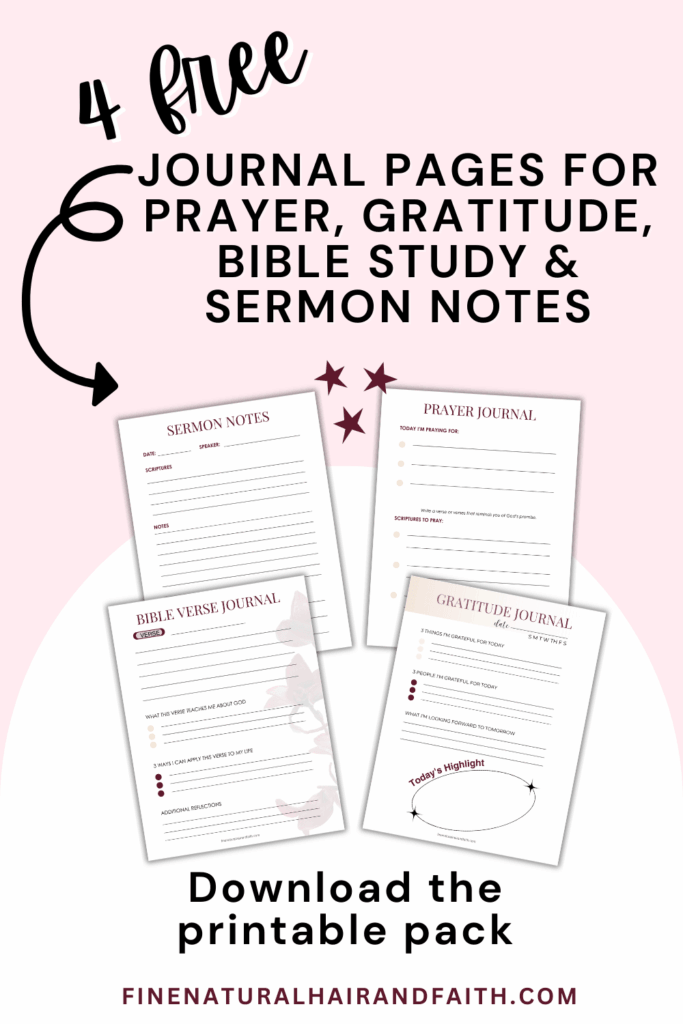
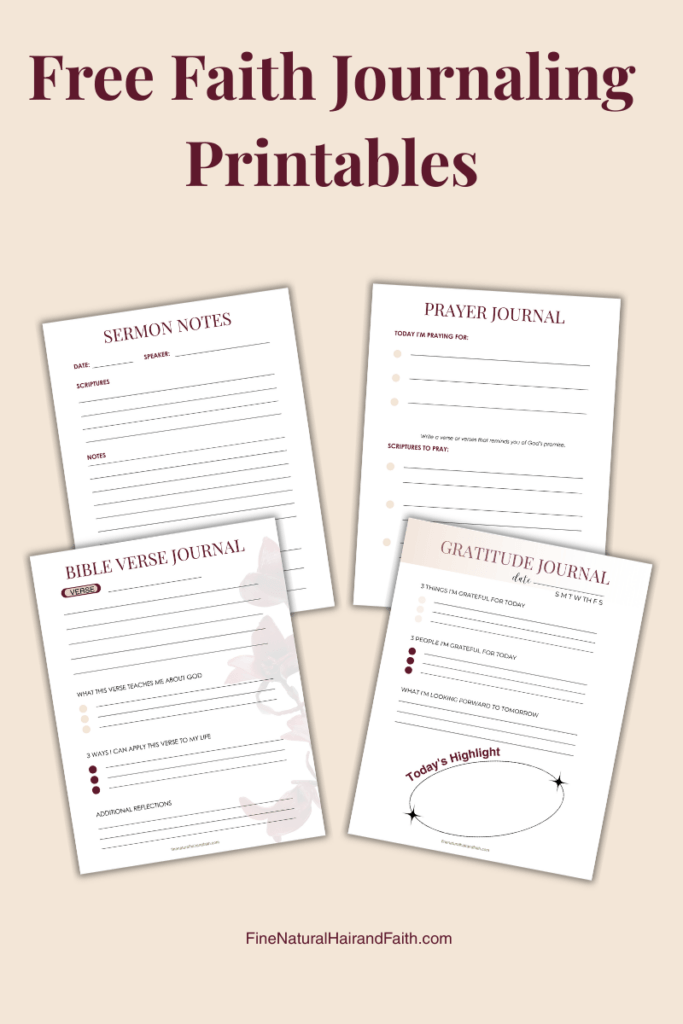
While using a spiral bound or other type of notebook to write everything out in one place is absolutely sufficient, perhaps you would like to create your own binder with printables you can arrange. I created 4 printables to help you with your Christian journaling practices. No need to sign up for anything. Simply click the image below and a PDF will open for you to download directly.
BONUS: Things to Write About in Your Faith Journal
If you are seeking to just “free” journal your thoughts in a faith planner or feel unsure what to write about, here are 20 different Bible journaling prompts and Christian journaling ideas to get you started.
- Which short Bible verses encourage me today?
- What deep Bible verses reveal something new about God’s character?
- What faith scripture do I want to practice through scripture memorization this month?
- Which biblical words stand out in my current Bible reading?
- What prayer could I write to God today?
- What am I thankful for in this season?
- Which Christian faith goals should I focus on right now?
- What lesson from a recent sermon is still on my mind?
- What truth about being a daughter of God do I need to remember today?
- What has God been teaching me through my current circumstances?
- What Bible verses would strengthen my faith if I memorized them?
- Which faith verses bring me comfort during difficult moments?
- What Bible words appear repeatedly in the passages I have been reading lately?
- What promise from scripture do I need to hold onto today?
- How has God answered a prayer I wrote in this journal before?
- What part of my spiritual growth journey can I see more clearly when I look back?
- What scripture would I write as a prayer for someone I care about?
- What is one lesson from the Bible that I want to apply this week?
- What does today’s Bible reading reveal about God’s character?
- What does today’s devotional scripture teach me about trusting God more fully?