
How to Moisturize and Seal Fine Natural Hair for Better Moisture Retention
Curly hair has a reputation for being dry, and fine natural hair is no exception. If you’ve ever finished wash day with soft, hydrated curls only to have them feel dry and brittle a couple of days later, you’re certainly not alone. It’s frustrating to spend time moisturizing your hair only to wonder where all that moisture disappeared to before the week was even over.
Many people assume the answer to longer-lasting moisture is finding what they think is the best moisturizer or trying a different oil to seal. In reality, that’s usually not the problem. Learning how to moisturize fine hair is important, but learning how to seal moisture into fine hair is what makes the biggest difference. Moisture that’s never retained won’t do your hair much good.
Think of it like filling a bucket with water. If there are holes in the bottom, you can keep pouring in more water, but the bucket never stays full. Your hair works much the same way. Moisturizing gives your hair the hydration it needs, but moisturizing and sealing work together to help keep that hydration where it belongs.
The good news is that you don’t need a cabinet full of products or an overly complicated routine to moisturize fine natural hair successfully. A few simple techniques, paired with products that work well for your fine strands, can help your hair stay softer, more hydrated, and less prone to breakage throughout the week.
In this article, I’ll show you exactly how to hydrate fine hair, improve moisture retention, and build a moisturizing routine that works for fine natural hair.
I’ll also share my favorite methods for wash day and mid-week moisturizing, explain how I seal moisture into my own hair, and recommend some of the best moisturizers for fine hair that have consistently worked well for me.
Why Moisture Retention Is the Real Issue
Have you ever tried recreating a hairstyle you saw from your favorite natural hair creator only to end up finding little pieces of hair in your sink, on your bathroom counter, or scattered across your shoulders by the end of the day? If any of this is happening, your hair is communicating something to you.
Dry hair is fragile hair. And because fine strands are naturally smaller in diameter than medium or coarse strands, they aren’t as resilient.
Add dryness into the equation, and breakage becomes much more likely. That’s why learning to moisturize fine natural hair isn’t simply about making it feel soft. It’s one of the best things you can do to support healthy, more resilient hair over time.
Some other things that may surprise you:
Getting moisture into your hair usually isn’t the biggest challenge. Unless you have very low porosity hair, water and moisturizing products can often enter the hair shaft fairly easily. The real struggle is moisture retention – keeping that moisture inside long enough for it to actually benefit your strands.
This is where the issue often lies in hair care routines.
People faithfully apply leave-in conditioners, creams, and moisturizers to their hair, but they either skip the sealing step altogether or use products that aren’t a good match for their fine hair. The result is hair that feels wonderfully moisturized immediately after styling but noticeably drier a day or two later.
Learning how to seal moisture into fine hair doesn’t mean you trap your hair beneath heavy oils or thick butters. In fact, that’s one of the quickest ways to weigh fine strands down.
Instead, the goal should be to create a lightweight barrier over your hair that helps slow down the loss of moisture while allowing your hair to remain soft and bouncy.
Once you understand that moisturizing and sealing are two separate—but equally important—steps, the way you care for your fine natural hair will be much more effective.
How to Moisturize Fine Hair: A Step-by-Step Process
Now that we’ve covered why moisture retention is the real challenge, let’s talk about the process I use to keep my fine natural hair hydrated.
One of the biggest misconceptions in the natural hair community is that moisture comes from products. It doesn’t. Water is the true source of moisture. You don’t have an effective moisturizer without it.
Your leave-in conditioners, creams, and oils each have an important role to play, but none of them can moisturize your hair without water being present.
That’s why choosing products with water listed among the first ingredients is so important when you’re trying to moisturize fine natural hair effectively.
There are several popular methods for layering products, but the order you apply them can make a noticeable difference in how well your hair retains moisture. Many naturals swear by the LOC (Liquid, Oil, Cream) method, while others find that the LCO (Liquid, Cream, Oil) method works better for their hair. Personally, I use a slightly different approach depending on whether it’s wash day or a mid-week refresh.
On wash day, especially when I’m not styling my hair in a wash-and-go, I prefer the LCCO (Liquid, Conditioner, Cream, Oil) method. I find that adding a leave-in conditioner before my styling cream gives my hair longer-lasting hydration and improves moisture retention throughout the week.
However, when I choose to moisturize my fine hair mid-week, I simplify my routine by following the LCO (Liquid, Cream, Oil) method. It refreshes my hair without adding unnecessary buildup or weighing my fine strands down.
The biggest takeaway is this: how you moisturize your hair on wash day sets the stage for the rest of your week. When your hair starts off well hydrated and that moisture is properly sealed in, it’s much easier to maintain soft, healthy hair between wash days.
LCCO Method: How I Moisturize Fine Natural Hair on Wash Day
Wash day is where your hair receives the majority of its moisture, so I like to take advantage of that while my hair is freshly cleansed and fully hydrated. Rather than rushing through this part of my routine, I focus on layering each product while my hair is still soaking wet so every step builds on the one before it.
My wash day routine looks like this:
- After washing and deep conditioning, apply a leave-in conditioner.
- Apply a styling cream.
- Seal everything in with a lightweight oil (usually an oil blend).
- Stretch my hair with the RevAir.
I know it can be tempting to towel dry your hair first, but I recommend applying all of your moisturizing products while you’re still in the shower or immediately after stepping out.
The humid environment helps prevent your hair from drying too quickly, giving your products a chance to trap that water inside the hair shaft before it begins to evaporate.
That means applying your leave-in conditioner, aloe vera juice or gel (if you use it), styling cream, oils, and even your styler while your hair is still very wet. Think of it as giving your hair the best possible opportunity to hold onto the moisture you’ve just worked so hard to put into it.
LCO Method: How I Hydrate Fine Hair Between Wash Days
Even with a solid wash day routine, there are times when your hair could use a little extra moisture before your next wash day. Refreshing your hair doesn’t have to mean starting over or piling on a bunch of products. In fact, for fine hair, less is definitely more.
When I need to refresh my moisture mid-week (and this isn’t all the time), this is the process I follow:
- Working in four sections, I lightly spritz each section with water until it’s damp—not soaking wet.
- I apply a creamy moisturizing product.
- I follow with a lightweight oil to help seal in the moisture.
- I loosely twist each section and allow it to dry most of the way before styling.
This routine gives my hair the moisture it needs without leaving it coated in heavy products. It’s also a simple way to improve moisture retention throughout the week if your hair tends to dry out before wash day.
Even though I have low porosity hair, I find that this process still works well for giving my hair the surface-level moisture it needs. When needing to hydrate fine hair, that happens on wash day by way of your deep conditioner.
How to Seal Moisture Into Fine Hair
If there’s one step that’s key to making sure you know how to moisturize fine hair (any hair, really), it’s sealing. Moisturizing and sealing go hand in hand. One puts moisture into the hair, while the other helps slow down how quickly that moisture escapes.
After washing, your hair is at its most hydrated. The challenge is keeping it that way. That’s where the right sealant comes in. For fine natural hair, the key is choosing products that protect your moisture without leaving your strands limp, greasy, or weighed down.
Below are a few simple guidelines that have worked well for me.
Use Lightweight Oils Along the Length of Your Hair
Fine hair generally responds best to lighter weight oils because they create a protective barrier without coating the hair too heavily.
My favorites include jojoba, grapeseed, argan, sweet almond, and avocado oil. These oils help support moisture retention while allowing my fine strands to maintain movement and volume.
Save Heavier Oils for Your Ends
Your ends are the oldest part of your hair, and they’re also the most vulnerable to dryness and breakage. Since they brush against your clothing every day, they tend to lose moisture faster than the rest of your hair.
That’s why I like to use a heavier oil, such as Jamaican Black Castor Oil, only on my ends. It provides extra protection where it’s needed most without weighing down my entire head of hair. I’ll typically only use this oil on the ends of braids or twists.
Adjust Your Routine During Colder Weather
Winter air can pull moisture from your hair much more quickly than warm, humid weather. During the colder months, I often switch to a DIY whipped mango butter recipe. It’s rich enough to provide extra protection against dry winter air while still being light enough for my fine strands. Hint: It’s all in the whipping!
Finding the right sealant can take a little experimentation because everyone’s hair responds differently. Don’t get discouraged if your first choice isn’t your favorite. Learning how to seal moisture into fine hair is less about finding one magical product and more about discovering what helps your hair stay soft, hydrated, and manageable the longest.
Wash Day Habits That Improve Moisture Retention
Long before you apply your leave-in conditioner or styling cream, your wash day routine is already influencing how well your hair will hold onto moisture throughout the week. Healthy moisture retention starts with creating the right foundation.
These are a few habits that have made the biggest difference in my own routine.
Always Start with a Pre-Poo
A good pre-poo helps prepare your hair before shampooing by minimizing moisture loss during the cleansing process. If you’ve never incorporated one into your routine, it’s a simple habit that can make wash day feel much gentler on fine strands.
Never Skip Deep Conditioning
If I had to choose just one step that consistently improves how hydrated my hair feels, it would be deep conditioning. I also recommend using a heat source whenever possible. The gentle warmth helps your deep conditioner do its job more effectively, allowing your strands to absorb the moisture they need.
30 to 40 minutes is plenty of time.
Do Protein Treatments Before Deep Conditioning
If you’re doing a protein treatment, follow it with your deep conditioner rather than the other way around. The deep conditioner helps restore balance so your hair doesn’t feel stiff or overly strengthened afterward.
Use Products That Work Together
One often overlooked part of moisturizing and sealing is maintaining your hair’s pH. Many product lines are formulated to work together from shampoo to styler, helping return your hair to its natural pH of around 4.5 to 5.
If you enjoy mixing products from different brands, that’s perfectly fine too. You can always test the pH of your products with inexpensive pH strips if you’re curious how they compare.
Best Oils for Sealing Moisture Into Fine Natural Hair
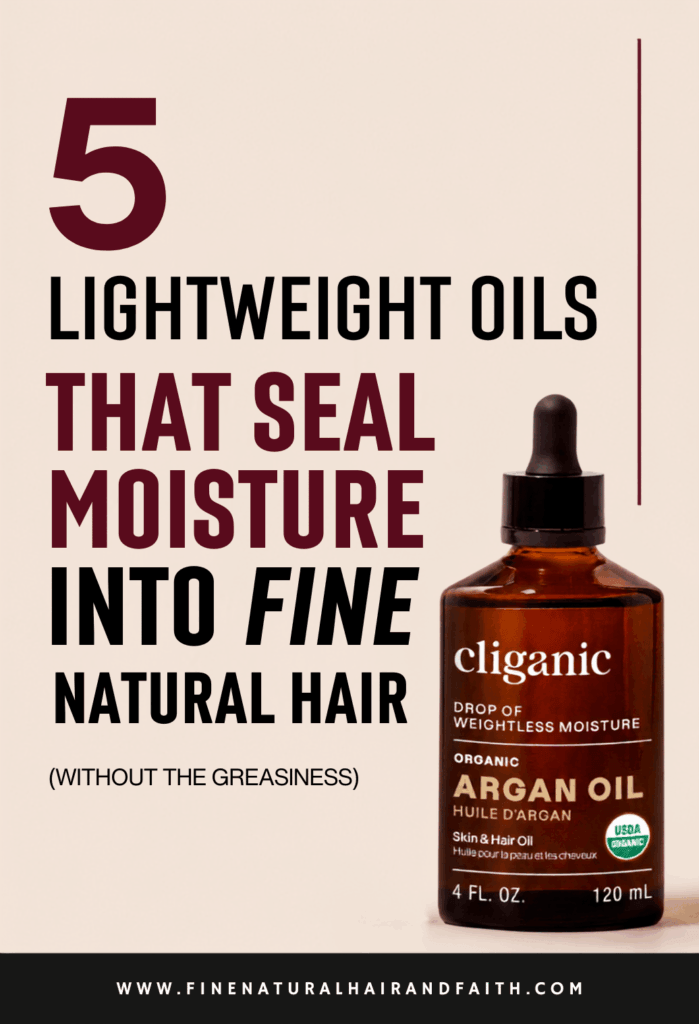
When it comes to sealing moisture, lighter oils are usually the best choice for fine strands. They help slow moisture loss without leaving the hair feeling coated or heavy.
My favorites are:
- Jojoba Oil
- Grapeseed Oil
- Sweet Almond Oil
- Avocado Oil
- Argan Oil <~~ Love the Cliganic brand
Every head of hair is different, so don’t be afraid to experiment. What works beautifully for someone else may not be your perfect match, and that’s okay. The goal is finding an oil that supports moisture retention while allowing your hair to stay soft, light, and full of movement.
Best Moisturizers for Fine Hair (that wont’ weight it down)
Because water is the true moisturizer, I always look for products that list water high on the ingredient list while still feeling lightweight enough for fine hair.
These are a few products I’ve consistently had success with:
- Camille Rose Naturals Fresh Curls (contains castor oil but still feels surprisingly lightweight on fine hair)
- Shea Moisture Curl Enhancing Smoothie
The best moisturizers for fine hair don’t necessarily have the longest ingredient list. Yet, they are the ones that help your hair stay moisturized without causing buildup or weighing your curls down.
Best Leave-In Conditioners for Fine Hair
A good leave-in conditioner creates the perfect foundation for the rest of your moisturizing routine. These are the ones I have used in rotation:
- Kinky Curly Knot Today
- Shea Moisture Strengthen, Grow & Restore Leave-In
- My Kimmaytube-inspired DIY Leave-In Recipe
- Eden Bodyworks Coconut Shea Leave-In
Final Thoughts
Learning how to moisturize fine hair isn’t about finding one miracle product or following someone else’s routine exactly. It’s about understanding what your hair needs and building a simple, consistent system that supports healthy moisture retention.
Once you realize that water provides the moisture and your products help your hair hold onto it, the entire process is more effective. Focus on moisturizing and sealing in a way that works with your fine strands rather than against them.
Remember, healthy, well-moisturized hair isn’t just softer to the touch. It tangles less, styles more easily, experiences less breakage, and has a much better chance of retaining length over time.
If you’ve been wondering how to hydrate fine hair without weighing it down, start with the methods in this guide. Experiment with the LCCO and LCO routines, pay attention to how your hair responds, and don’t be afraid to make small adjustments along the way. Fine natural hair can absolutely stay hydrated for longer periods of time. You just have to give it the right combination of moisture, sealing, and consistency.
More on Moisture
Moisturizing by Porosity Type
- How to Moisturize & Seal High Porosity Hair
- How to Moisturize & Seal Low Porosity Hair That’s Also Fine
More Moisture Tips
- 7 Ways to Get Moisture Into Natural Hair
- Good Hair Habit #4 – Moisturize and Seal Daily
- Taking Advantage of Humid Weather for Hair Growth
- The Best Time to Use Glycerin to Moisturize Your Hair
- When the LOC Method Seems to Fail
- Why The Order in Which You Layer (Apply) Your Hair Products Matters
Moisture and Products
- One Product You Need for Your Softest Most Hydrated Hair Ever!
- 3 Protein Treatments That Strengthen & Moisturize Fine Hair
- How to Choose Good Hair and Skin Moisturizers
- The Coconut Oil Debate: Oils vs Moisturizer
- Replacing Honey with Agave in Natural Hair Recipes?
- Hair Steaming & Detangling with Glycerin | Wash Day Experience
Continue the Fine Natural Hair Wash Day Series
This post is a part of the series, “Sorting out a Fine Haired Natural’s Wash Day Step by Step.” Here are previous posts:


