Why Fine Natural Hair Frizzes in Humidity Even When It’s Moisturized
You washed, deep-conditioned, used a leave-in, and sealed in your moisture with a lightweight oil. Your hair felt amazing when you left the house. Then the humidity hit, and it was like all your hard work went in the crapper.
If you’ve been dealing with fine natural hair frizz every time the weather warms up and gets humid, you’re not alone. I live in New York. We have 4 seasons, and the summer season is brutally humid.
Here’s the thing. Your hair isn’t frizzing up because there’s something wrong with it. It frizzed because you left out one critical step in your routine OR you used a product that was less fine hair friendly and more humidity friendly. There’s also some actual science behind what’s happening when hair frizzes, and once you understand it, you can start making smarter choices for your hair before you ever walk out the door.
Why Does Natural Hair Frizz in Humidity?
Your hair is made of a protein called keratin. Inside each strand, those protein chains are held together by hydrogen bonds. Hydrogen bonds are extremely sensitive to water. Humid air causes hydrogen bonds to form between water molecules and the keratin proteins in your hair. And, because humid air contains far more water molecules than dry air, a strand of hair can form much higher numbers of these bonds on a humid day.
When many such bonds form between the keratin proteins in a strand, it causes the hair to fold back on itself at the molecular level and on the macro level, which means curlier, frizzier hair. If you want to read more of the science behind it, you’ll find some links to articles below.
So, the reason your hair frizzes in humid weather isn’t simply that it’s dry. It’s that airborne moisture is entering your strands and rearranging those bonds regardless of what you put on your hair beforehand. When humidity is high or the hair cuticle is damaged, more water enters the hair shaft, which can swell and crack the cuticle layer. This is what causes hair to look a frizzy mess.
Why Does My Moisturized Natural Hair Still Frizz?
This is one of the most common questions, and it makes complete sense to ask it. You figure if your hair is moisturized, it shouldn’t be frizzy. Especially since you also sealed in that moisture. So why is your moisturized hair still frizzing up?
The short answer is this: Frizz in humid weather isn’t always a dryness problem. The problem is with the cuticle layer. When you are clear on your hair’s porosity level, you’ll understand why.
High Porosity Hair and Humid Weather
High porosity hair is hair that has a raised, uneven or damaged cuticle layer which causes it to absorb water quickly but loses it just as quickly. This results in quick dry times, but also frizz in humidity, and even greater vulnerability to breakage.
An open cuticle gives humidity easy access to the inside of your strands. It doesn’t matter how well you moisturize if the cuticle layer is so open that excess moisture can’t be blocked out.
For fine, high-porosity strands, preventing humidity from causing frizzy hair can be hard to manage. Fine strands are already lightweight and reactive to environmental changes on their own. Add a raised cuticle on top of that, and humidity doesn’t just affect your hair; it causes massive swelling. Now, if you know, you know. Fine hair tends to be flat and limp, so maybe a head of “swollen” hair is appreciated. Or maybe not. You judge!
If you want to combat frizzy hair, the remedy is to seal your cuticle before you step outdoors. After your leave-in, apply a lightweight oil or butter to slow down how quickly that airborne moisture can get in. If you are rocking curls, a light gel cast over your hair will do wonders. For high porosity fine hair, this step is non-negotiable.
Low Porosity Fine Natural Hair and Humid Weather
Low porosity hair gets left out of this conversation a lot, but shouldn’t. Just because low porosity hair has a tight, flat cuticle, which makes it harder for moisture to get into the hair shaft, it’s not excluded from the effects of humidity. Harder does not mean impossible. When humidity is really high, it forces water into the strand, and then the hair has a difficult time releasing it efficiently.
Trapped moisture in a fine low porosity strand will cause that strand to swell, which can then lead to frizz and loss of curl definition.
Fine low porosity hair also tends to be more prone to product buildup. In humid conditions, any unabsorbed product sitting on the outside of the hair shaft gets activated by the moisture in the air and contributes to frizz and puffiness. So, even though low porosity hair is quite different from high porosity, you end up looking at the same result: frizzy curly hair that doesn’t look its best.
For low porosity fine hair, the key is to keep your product load light and avoid anything too heavy or oil-dense on top of the strand in humid months. That doesn’t mean you don’t seal. You just seal more strategically.
One product that I think works excellently in humid weather for just this purpose is
Color Wow Extra Strength Dream Coat Anti-Humidity Spray. It’s activated with heat. This device paired with this product does wonders for keeping frizz at bay. It effectively helps to seal the spray into your strands. I didn’t use to like it because I thought it didn’t work, but then I discovered I was using it wrong!
Your Products Could Be Making Things Worse
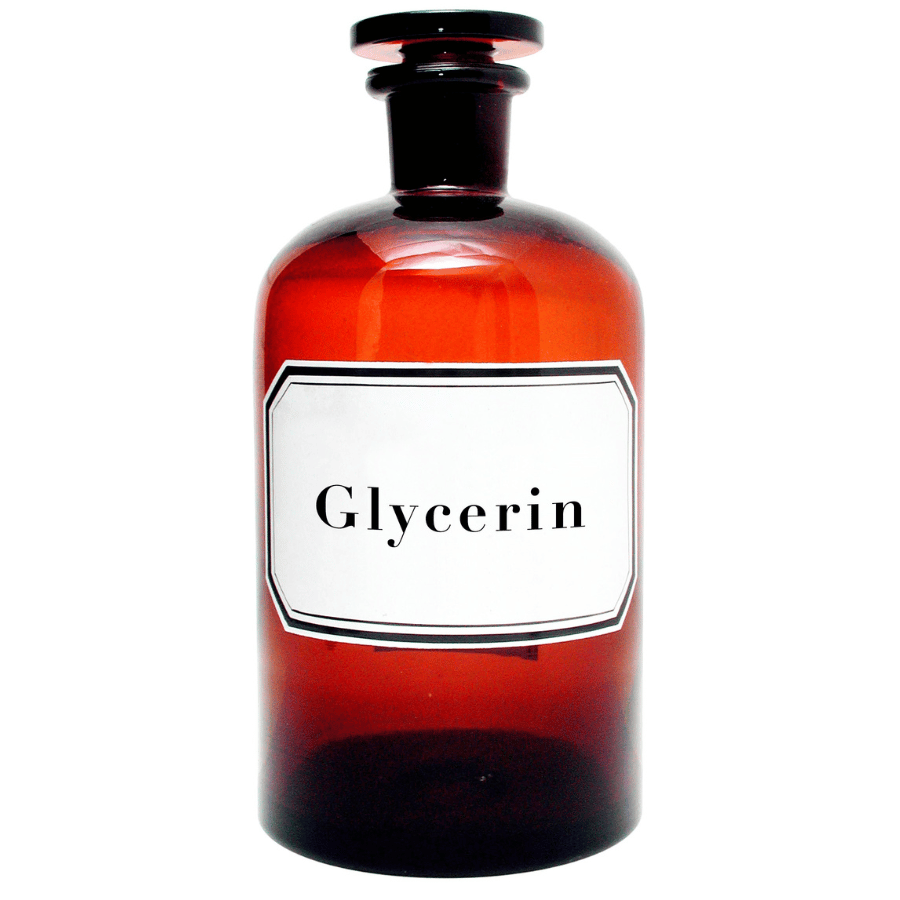
This brings me to my next point. While we are encouraged to use a leave-in conditioner to help with keeping the hair moisturized, the problem is some leave-ins and other moisturizers contain glycerin.
Glycerin is a humectant, meaning it draws moisture into your hair. In specific dry conditions, that’s exactly what you want. But when dew points are above 65°F, glycerin will pull water from the environment and cause your hair to frizz up and lose its curl definition.
So in high humidity, your moisturizing leave-in could be pulling even more moisture into your hair from the surrounding air. This is one of those anti frizz hair tips that doesn’t get talked about enough. Check your product ingredients before they go into your rotation for summer. If glycerin is high on the ingredient list in your leave-in or styler, consider switching to something more emollient-based during humid months.
The Missing Link for Anti Humidity in Natural Hair: Flaxseed Gel
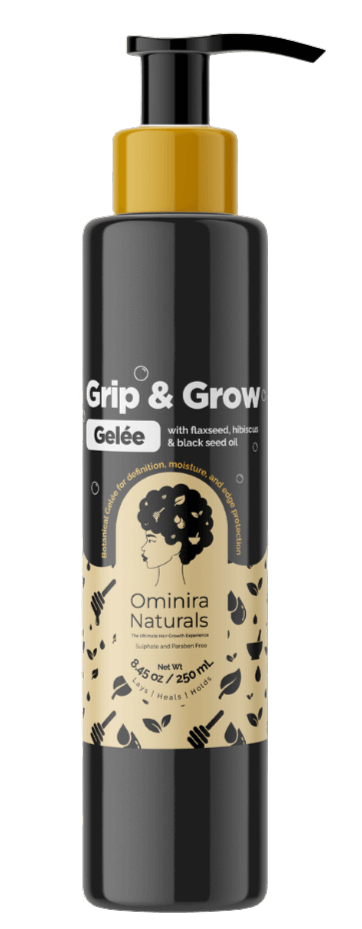
One of the most practical things you can do for fine natural hair in humid weather is to use a gel to set and seal your curly styles. Many types of gel can be used for this purpose but in my humble opinion, flaxseed gel is the best option for fine strands.
Flaxseed gel is lightweight, which if you don’t know by now, it matters a lot for fine hair. It provides hold without weighing strands down the way heavier commercial gels can. It’s also very nourishing for the hair. The bottle photographed above is my go-to. It’s a flaxseed gel from Ominira Naturals that’s also enriched with other beneficial ingredients like hibiscus, brahmi, amla, and more.
When you apply flaxseed gel for humidity protection to natural hair, it creates a layer of structure over your style (without crunch) that helps lock your curl pattern in place before the outside air has a chance to disrupt it.
Aloe vera gel may come to mind, but here’s the deal. It’s also a humectant and too moisturizing. So, this gel isn’t the best in humid weather.
If you’re wearing a wash and go, or setting a twist-out or braid-out, applying flaxseed gel over your leave-in is a step that will make a noticeable difference in how your style holds throughout the day. For fine hair, a little goes a long way. Start with less than you think you need and build from there.
Frizzy Hair Tips: The Way to Combat Humidity
When it comes to caring for frizzy hair in humid weather, using more product is usually not the answer. Below are some specific tips that will work not just for fine natural hair but for all hair types:
Know your porosity. Regardless of the circumference of your strands, and regardless of if you have high or low porosity hair, your porosity determines how you should moisturize and seal. Without definitively knowing your porosity, you’ll experience a lot of trial and error. Not just for humidity control but throughout your entire hair regimen.
Seal after you moisturize. A lightweight oil, after being applied as a leave-in creates a barrier that slows down excess moisture absorption from the air. Don’t skip this step in summer.
Use a gel to set your styles. Flaxseed gel being the gold standard, apply over your leave-in to give wash and gos, twist-outs, and braid-outs the hold they need to withstand humidity. It’s one of the most underrated frizzy hair tips for fine natural hair.
Watch out for glycerin. In high humidity, avoid products with glycerin high up on the ingredient label. In fact, avoid them altogether. The only possible exception is a deep conditioner, which will be washed out anyway.
Keep product applications light. Fine hair does not do well with heavy product layering. Too much product creates buildup, weighs strands down, and makes it more difficult for any sealant to work well.
Hairstyles for Humid Weather
Sometimes the best anti frizz strategy is choosing a style that works with the weather instead of against it. These are some of the best summer hairstyle ideas for fine natural hair. They are simple, cute hairstyles for hot weather that look intentional even on the most humid days. Plus, you can consider some of these hairstyles “rescue” styles for when humidity has already done its thing.
1. Loose Curly Bun
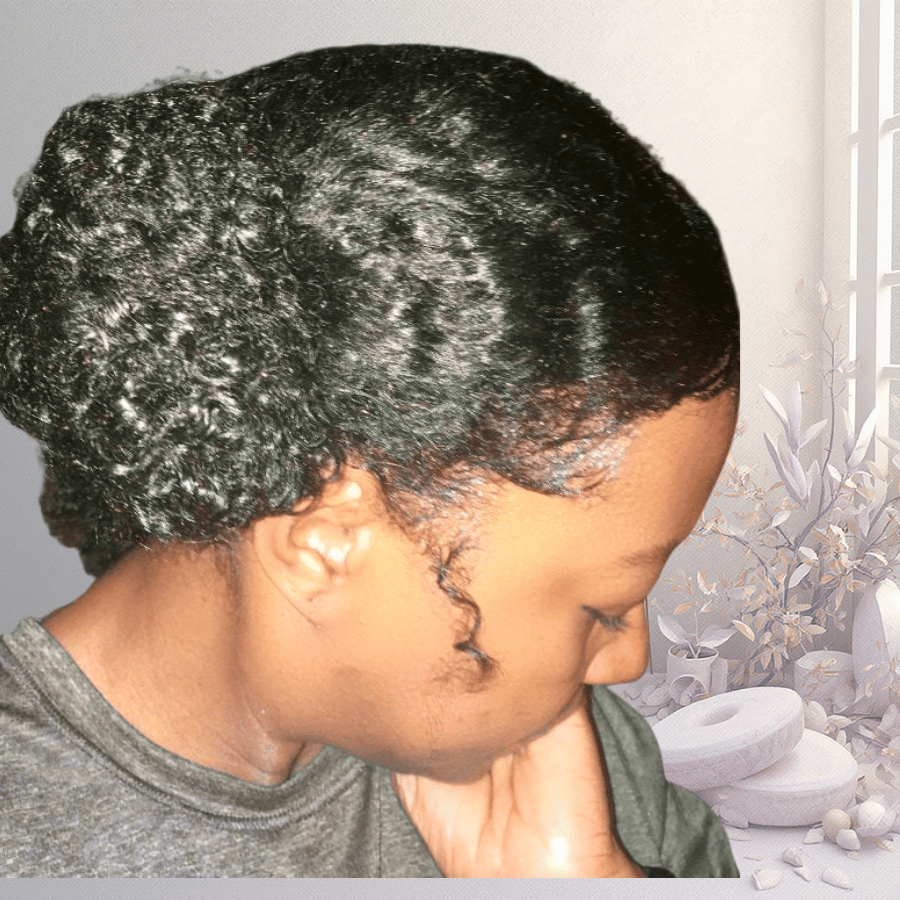
A loose curly bun is one of the most simple hairstyles for hot weather because it keeps your hair up and off your neck while still showing off your natural texture. It works especially well on day two or three hair when your curls have been set but may be starting to droop a bit. try it to the side, the back or the top of your head for a different look each time.
Don’t pull your hair too tightly. A looser bun reduces tension on fine strands and keeps the style looking relaxed and effortless, which is the perfect summer vibe.
2. Double Flat Twist
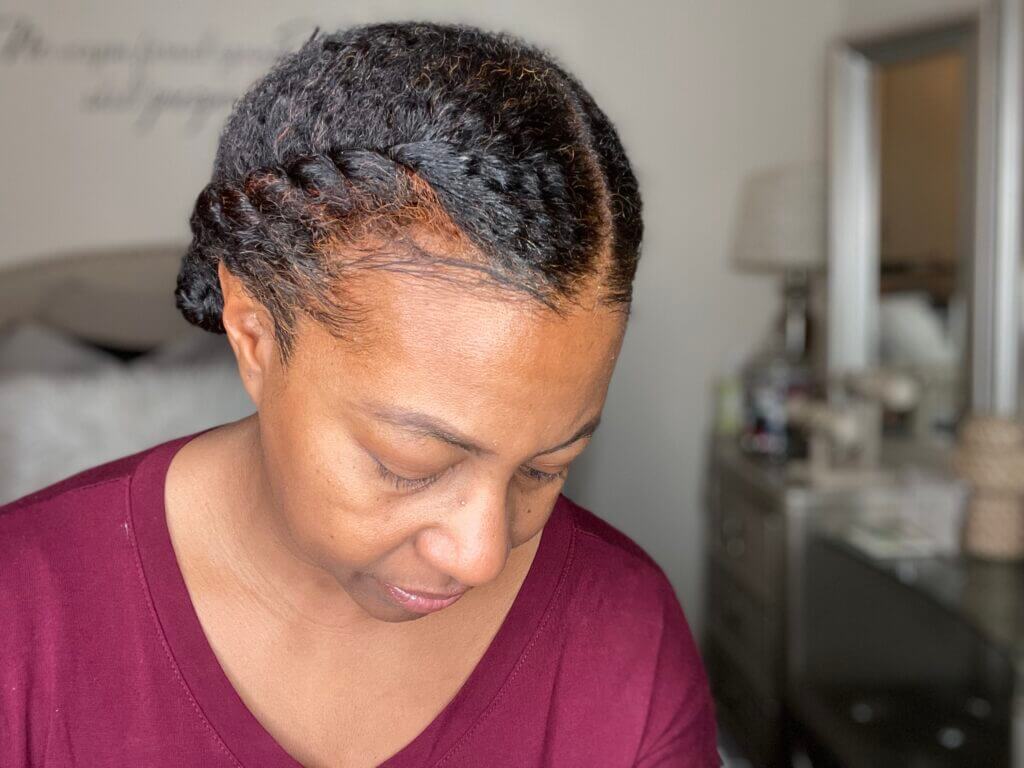
The double flat twist is one of those hairstyles for hot weather that does double duty. It’s a protective option that keeps your ends tucked away, and it also holds up well in humidity because your hair is already gathered and controlled.
Flat twists on fine natural hair work best with a light holding product like flaxseed gel applied before you twist to keep the style smooth and defined.
Also, our trusty flaxseed gel helps keep that halo of frizz that tends to settle at the top of the head at bay.
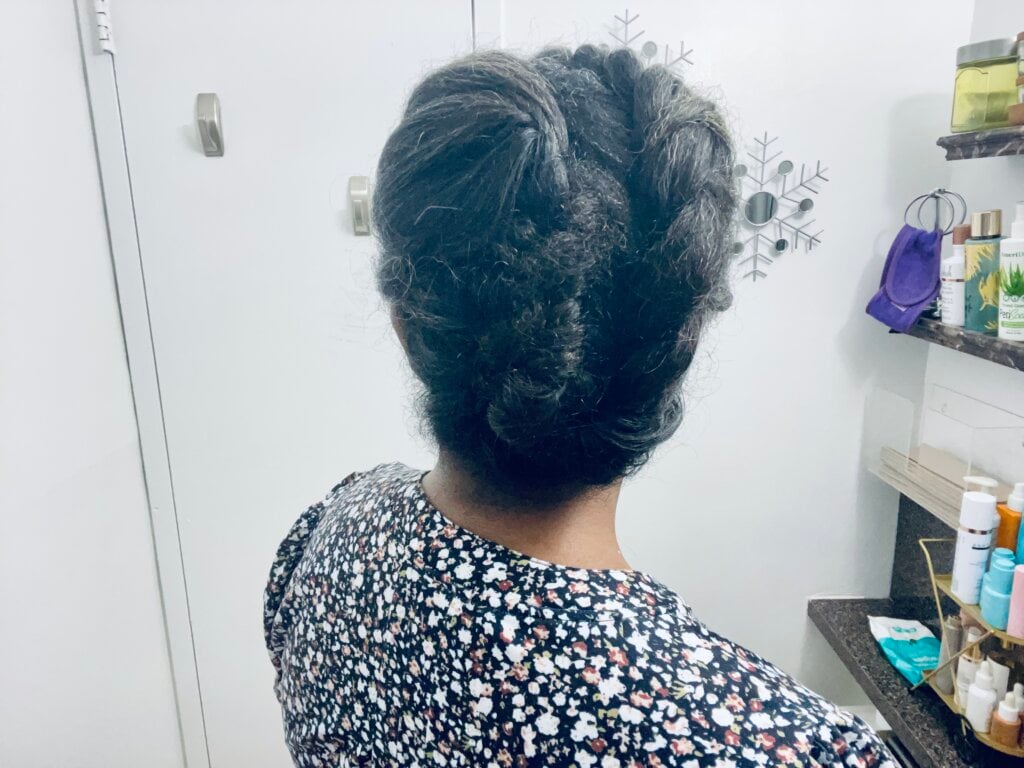
Here’s an alternative version done on blown out hair with the twists done loosely down the center.
3. Half Up Half Down

This style is one of the most versatile and easy hair styles for hot weather because it shows off your natural curl pattern while also keeping your hair out of your face. For fine natural hair, avoid over-pinning, which can also cause breakage.
Do a simple two-pin hold or a single hair tie on the top section to keep your top section in place without creating unnecessary tension at the hairline. You could make that top section into a loose ponytail or a top knot. Whatever floats your boat.
Stop Humidity from Frizzing Your Hair
Humid weather doesn’t have to mean a bad hair day every time you step outside. Once you understand why fine natural hair and humid weather clash at the chemistry level, you are better able to build your routines around your specific porosity. Now, get in front of the frizz instead of chasing it after the fact.
Sources: “Why Humidity Makes Your Hair Curl” (Smithsonian Magazine); “Why Hair Turns Curly and Frizzy in the Summer, According to Chemistry” (Scientific American)